

-
Amanda, Slack emoji enthusiast, turns meetings into emoji partiesAmanda uses approximately four hundred emojis per day. Every message is a rainbow of reactions. Amanda has strong opinions about which emoji conveys 'moderate enthusiasm' versus 'aggressive agreement.' A simple 'sounds good' becomes a full emoji sentence. Meetings with Amanda include time spent debating which emoji best represents the agenda. Amanda, most people just type words. The emoji option is there for when typing is too hard.
-
Brian, the meeting extender, a five-minute meeting becomes thirty-fiveBrian has a physical inability to end a meeting. A quick stand-up becomes a TED talk. Brian thinks every meeting needs additional context. He explains his reasoning. He explores tangents. He brings up something someone said two weeks ago. He's now forty minutes into a ten-minute meeting and everyone has abandoned hope. Brian, sometimes people just need an answer, not a journey.
-
Carla, the fish microwave queen, heat fish in the officeCarla brings fish for lunch. Carla microwaves it. The entire office now smells like a fishing boat. Carla seems unaware that this is a communal crime. She does this twice a week. The office has been vandalized with her smell. Carla, there are unwritten rules about office microwaves and you've shattered all of them.
-
Derek, company fleece collector, owns more fleece than street clothesDerek owns seven company-branded fleeces. Derek wore at least one per day. Derek has more company swag than actual personal clothing. His weekend outfit is probably a company fleece and jeans. Derek has created an identity around the fleeces. Derek has told people about the different fleeces like they're collectible items. Derek, they gave those away at orientation. They're not valuable.
-
Emma, the code review over-explainer, two hundred lines of feedback for four-line PREmma leaves a code review with extensive feedback. The code change was four lines. Emma's review is two hundred lines long. She explains why, the alternatives she considered, and historical context for similar decisions. Emma has given a dissertation-length response to a typo fix. Emma seems to think every code change is her chance to educate. Emma, sometimes you just approve it.
-
Frank, the boss-CC guy, CC-ing the boss on everythingFrank CCs the boss on emails he doesn't need to. A simple project update becomes a formal memo with leadership cc'd. Frank is creating a paper trail for everything. Frank wants everyone to know he's being thorough. Frank has accidentally created anxiety around emails because people think if the boss is cc'd, something is serious. Frank, you're not being careful. You're being annoying.
-
Gina, the Slack-at-midnight person, messages like she's awakeGina sends Slack messages at midnight like the office is still active. She messages at 2 a.m. with new thoughts. She threads these ideas like they're urgent. People wake up to seventeen messages from Gina from overnight. Gina is living in a different time zone than her own body. Gina, go to sleep. The message will keep.
-
Henry, the productivity app guy, has tried them allHenry discovered a new productivity app last month. He's already using system three. He's beta-testing system four. Henry has spent more time setting up productivity systems than actually being productive. Henry sends unsolicited screenshots of his organizational systems. Henry has a color-coded task management setup that only he understands. Henry, you're using the systems as procrastination.
-
Iris, the meeting minutes writer, creates documents nobody readsIris takes meeting minutes. She takes extremely detailed minutes. She documents every word spoken. She creates meeting summaries that are longer than the actual meeting. Iris sends these minutes to the entire team like it's a critical historical document. Nobody reads them. Iris thinks she's essential. Iris is just creating busywork. Iris, we'll read the action items. We don't need the full transcript.
-
Jack, the standup talker, turns reports into monologuesJack has a standup and it's supposed to be three minutes. Jack is still talking twenty minutes later. He's told stories nobody asked for. He's given context that nobody needed. Jack seems to think standup is his time to discuss his entire week. The team is checking their phones. Jack is still talking. Jack, 'My update is X' would be sufficient.
-
Leo, the working lunch guy, eating at his desk every dayLeo eats lunch at his desk every day. Leo smells now. Leo seems unaware that breaks exist. Leo has brought something pungent at least twice. Leo is slowly poisoning the shared office space with lunch aroma. Leo keeps eating. Leo thinks productivity means never stopping to actually eat at a normal time and place. Leo, your coworkers are gagging.
-
Maria, the 'just one more thing' person in meetingsMaria says she's done with her update. The meeting is wrapping. Maria suddenly has 'just one more thing.' That thing is actually three things. Maria launches into a new discussion. The meeting that was supposed to end is now extended. Maria does this at every meeting. Everyone has learned to schedule fifteen extra minutes when Maria is involved. Maria, 'one more thing' always becomes a rabbit hole.
-
Nathan, the keyboard clicker, typing at maximum aggression volumeNathan types like he's angry at the keyboard. His typing is audible three desks away. Nathan has created a percussion section around his work. Nathan is not typing aggressively, he's just naturally loud. The mechanical keyboard doesn't help. Nathan's colleagues have considered earplugs. Nathan is completely unaware. Nathan, your keyboard sounds like it's suffering from your typing.
-
Olivia, the 47-coffee-break person, takes more breaks than work timeOlivia takes a coffee break every forty minutes. She's gone for ten to fifteen minutes each time. Olivia has taken forty-seven coffee breaks this month. Olivia seems to work in coffee breaks with occasional work in between. The coffee machine is her actual office. Olivia, is it the coffee or are you just avoiding your desk.
-
Patrick, the early adopter, using beta software for critical workPatrick has found the newest software tool and immediately integrated it into the critical workflow. The software is still in beta. It crashed twice. Patrick thinks it's revolutionary. The team is using a backup system while Patrick taps his foot waiting for his tool to be restored. Patrick will do this again next month with different software. Patrick, stability matters more than cutting edge.
-
Quinn, the meeting canceler, books then cancels constantlyQuinn books a meeting. Quinn then cancels it. Quinn reschedules it. Quinn cancels again. Quinn might actually want this meeting or might not. The team has learned not to trust Quinn's calendar. Quinn's calendar is more of a suggestion. Quinn seems to think calendars are optional. Quinn, commit or don't. The wishy-washy scheduling is worse than no meeting at all.
-
Robert, the 'reply all' guy, responding to the entire company for a two-person issueRobert got an email that required a simple response. Robert hit reply all instead of reply. Now everyone in the company knows about his thoughts on the proposal. Robert has created a confusing email thread for hundred-plus people. Robert is unaware he did this. The email thread continues with twenty more reply-all responses because now everyone has chimed in. Robert, learn to read the address bar.
-
Tim, the serial meeting maker, hosts the most meetingsTim creates a meeting for every topic. A quick chat could happen in person. Tim needs a meeting. A quick call could work. Tim needs a meeting scheduled in advance. Tim has created so many meetings that people have stopped accepting his invites. Tim doesn't understand why people aren't attending. Tim, not everything requires a calendar invite.
-
Ursula, the desk hopper, never at her assigned deskUrsula sits at different desks every day. Her assigned desk is never used. People looking for Ursula have to search the entire office. Ursula seems to enjoy the mystery of her location. Ursula hasn't checked her assigned desk once. Ursula has created a scavenger hunt around the office. Her desk is now used as storage by other people. Ursula, you paid for that desk. Maybe use it.
-
Victor, the loud phone call guy, entire office is his private call spaceVictor takes calls at his desk at maximum volume. Everyone in the office now knows about Victor's personal life. Victor discusses private matters like he's in a phone booth. Victor doesn't see why he needs a private space to make calls. Victor's entire day is a shared conversation between him and the person on the phone. The office has learned everything. Victor, please find an empty room.
-
Wendy, the email writer, three-page explanation for a one-word answerWendy got asked a simple yes/no question. Wendy's response is three pages. She explains the answer, the reasoning, the historical context, and alternative perspectives. Wendy's email could be a Medium article. A simple 'yes' took three thousand words to explain. Wendy seems to think emails should be essays. Wendy, people just wanted to know if the report is ready.
-
Xavier, the Slack search avoider, asks questions already answeredXavier asks questions that have been answered in Slack. The answers are in the message history. Xavier doesn't search. Xavier just asks the group chat. Xavier has been answered seventeen times about the same topic. Xavier never retains the information. Xavier will ask again next week. Xavier, the search function is right there.
-
Zachary, the meeting attendee in name only, clearly not listeningZachary attends every meeting but never participates. He's staring at his phone. He jumps when asked a question, clearly caught off guard. Zachary missed the entire context of the meeting. Zachary will email asking what he missed. Zachary could have just attended. Zachary seems to think his physical presence counts as engagement. Zachary, if you're not going to pay attention, let someone else take the spot.
Three rules for a coworker roast that actually lands.
Use the office moment everyone already remembers.
The Slack thread. The all-hands story. The legendary email. Inside jokes from the team are gold.
Roast the role, not the person.
The over-CCer, the meeting overrunner, the fish-microwaver. What they do at work, not who they are outside it.
End with what they actually contribute.
The roast lands because the team genuinely values them. Make sure the room knows it by the end.
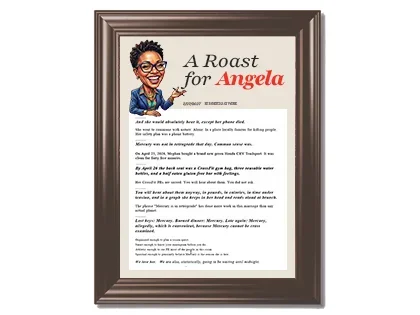
Want a roast written for the actual coworker?
RoastGift writes custom coworker roasts about real people: the actual quirks, the actual office moments, the inside jokes only the team gets. Speech-ready, delivered fast, makes a great retirement or going-away gift.
Visit RoastGift.com →Frequently Asked Questions
How do I roast a coworker without making it awkward?
Roast the behavior, not the person. Make fun of the thing they do that everyone already notices, not an inherent quality about them. A roast about microwaving fish is universal office humor. A roast about how they look isn't.
Is it okay to roast a coworker at the team lunch?
Only if it's specifically a roast situation and everyone's game for it. If it's a normal team lunch, keep it light and general. Save the heavier roasts for actual roast events or very casual groups where humor like that is already the norm.
What if the coworker doesn't have an obvious annoying habit?
Create a roast about their role or industry-specific quirks instead. Everyone has something they do repeatedly. Maybe they're always early to meetings, or they have a specific way of explaining things, or they're overly formal. The behavior doesn't have to be annoying, just distinctive.
Should I roast my boss?
Only if they're the type to appreciate it and you're in a culture where that's normal. Some workplaces are casual enough for boss roasts. Most aren't. If you're not sure, don't. A missed opportunity is better than a career misstep.