
-
Greg, VP of Sales, 12 years at the companyGreg schedules a quick sync. Forty-five minutes later, Greg is still talking about the Q2 pipeline while everyone watches their Slack notifications pile up. The quick sync is a lie we tell ourselves.
-
Linda, Marketing Director, brought three management books to the officeLinda keeps three management books on her desk. Their spines are uncracked. Linda has never read any of them, but everyone can see them during video calls, and that is the point.
-
Mark, Engineering Lead, reply-all enthusiastMark replies all to every email. The message was for one person. Mark copied fifteen others because Mark wants the team to know that Mark was thinking about it too.
-
Sarah, Operations Manager, calendar optimistSarah's calendar is booked solid for three weeks. Sarah keeps the open-door policy anyway. Nobody uses the door. Everyone knows better.
-
David, Director of Product, espresso machine truthseekerDavid visits the espresso machine four times a day and still calls it a coffee maker. For five years, David has called it the wrong thing. Nobody corrects David. Everyone has accepted this.
-
Jennifer, Team Lead, bandwidth mysticJennifer says 'bandwidth' like it is a real object. 'Do we have the bandwidth?' Jennifer asks. The team has hands. The team has time. The team does not have bandwidth.
-
Tom, Senior Manager, credit-taking championTom's team ships the product. Tom presents at the all-hands. Tom uses the word 'we' twelve times in fifteen minutes. The team counts every instance.
-
Michelle, VP of Operations, email novelistMichelle's performance review arrived in a forty-seven-paragraph email. The feedback could have fit on one page. Michelle needed every paragraph to make her point clear. The team printed it to read it properly.
-
Kevin, Product Manager, meeting-to-email translatorKevin holds a meeting to discuss a three-sentence email. The meeting takes one hour. Kevin could have simply replied to the email. Kevin did not think of this.
-
Patricia, Finance Director, circle-back specialistPatricia says 'circle back' in every conversation. Patricia says it when everyone is standing right there. Nobody needs to circle back anywhere. Patricia likes the phrase more than the action.
-
Raymond, Engineering Manager, the re-doerRaymond delegates the task. Raymond watches the work happen. Raymond does the task again himself anyway. Raymond worries the first version was not quite right. The first version was perfect.
-
Valerie, CMO, LinkedIn philosopherValerie posts a LinkedIn message about lessons learned. Something went wrong. Valerie mined five leadership insights from the setback. Valerie got one hundred forty-two likes.
-
Paul, Director of HR, move-the-needle guyPaul wants to move the needle on engagement. Paul is not sure what the needle is. Paul is not sure what moving it would look like. Paul is very sure that moving it is good.
-
Susan, Operations Lead, the VP cc'erSusan copies the VP on every email. The VP did not ask to be copied. The VP does not read Susan's emails. Susan copies the VP anyway because Susan wants the VP to know that Susan is professional.
-
Diane, Chief Marketing Officer, terminology troublemakerDiane mispronounces API like it rhymes with 'happy.' She has been saying it wrong for six months. Nobody corrects Diane. Everyone simply accepts that in Diane's office, the API is alive and well.
-
George, Director of Sales, the motivatorGeorge sends motivational emails at six in the morning. The team is not awake. George assumes the team reads them immediately. The team reads them at ten thirty and feels worse.
-
Helen, Product Director, synchrony questionerHelen asks if everyone is in sync. Everyone is already in sync. Helen asks anyway because Helen worries that someone is not in sync. Nobody is not in sync.
-
Frank, Department Head, the optimistFrank asks for feedback on the new process. The process is already implemented. Frank collects feedback anyway. Frank implements none of it because Frank already knows the process is good.
-
Nina, Senior Manager, the delegator who delegatesNina delegates to the person who delegates to someone else. The original task reaches the hands of someone new. Nobody is sure who owns it anymore. Nina is confident the right person has it.
-
Amy, Team Lead, the question askerAmy asks thoughtful questions in the meeting. Everyone appreciates the questions. Amy already knows the answers. Amy asks them anyway to show she is engaged.
Three rules for a boss roast that actually lands.
Target the behavior, not the person.
Comment on how they always say 'circle back' or how their open-door policy is blocked by their calendar. Never touch appearance, background, family, or beliefs. A great roast is something HR would smile at, not something HR would have to address. Stick to habits, catchphrases, and management patterns.
Be specific. Generic is forgettable.
The best roasts name a habit only your team knows about, a phrase they say constantly, a pattern everyone has watched happen a hundred times. Your boss mispronounces one tech term. Your boss delegates and redoes the work anyway. That is the roast. Make it vivid enough that the whole room sees it the moment you say it.
Read the room and the moment.
Roasting works when the boss has signed up for it and the audience expects it. Going-away parties, retirements, and milestone celebrations are perfect venues. Deliver it deadpan. Let the audience laugh before you smile. A roast should land like a high compliment wrapped in humor, not a wound.
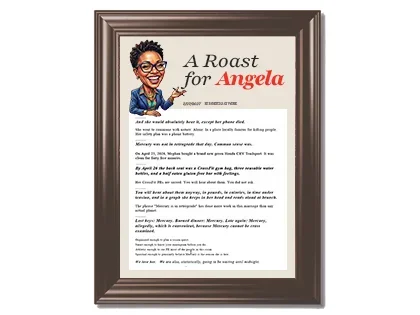
Want a roast written for the actual boss?
RoastGift writes custom roasts about real bosses: the specific management style, the specific catchphrases, the running jokes only the team gets. Speech-ready, delivered fast, makes a great going-away or retirement gift.
Visit RoastGift.com →Frequently Asked Questions
How do you roast your boss without getting fired?
Target the behavior, not the person. Comment on how they always say 'circle back' or how every meeting could have been an email, not on their personality or appearance. Timing matters: do it at a going-away, retirement, or milestone event where some roasting is expected. Read the room. If your boss can laugh at themselves, you have room to be specific and sharp. If your boss takes everything personally, keep it light and focus on universal office stuff everyone recognizes.
What makes a boss roast actually land at a work event?
Specificity. Generic jokes about bosses are forgettable. The best roasts name a habit only your team knows about, a phrase they say constantly, a pattern everyone has watched happen a hundred times. Your boss does something weird with email or always mispronounces one word or delegates and then redoes the work. That is the roast. Make it vivid enough that the whole room sees it the moment you say it. Deliver it deadpan. Let the audience laugh before you smile.
Is it okay to roast your boss?
Yes, in the right context. Roasting works when the boss has signed up for it, the audience expects it, and the target behavior is something the boss can hear without feeling personally attacked. Going-away parties, retirements, and milestone celebrations are perfect venues. Your boss roast should land like a high compliment wrapped in humor, not a wound. The best roasts say something true that everyone has noticed and laughed about privately, and now you are saying it in public with affection.
How do you keep a boss roast work-appropriate?
Never touch appearance, background, family, or beliefs. Stay away from politics, religion, weight, disability, or anything health-related. The roast should be about office behavior and management style only. A great boss roast is something HR would smile at, not something HR would have to address. Stick to habits, catchphrases, communication quirks, and management patterns. If you have to wonder whether a line crosses a line, cut it. The best roasts are sharp, specific, and completely defensible.